The modest bindi is well known to anyone from India or with an interest in Indian culture. It may instantly liven up any appearance with its inclusion. South Asian civilizations place a lot of importance on it, and it is revered in every way. There are now many bindi patterns available; the traditional dot is no longer the only option.
Everything is accessible for you to choose from, including straightforward to elaborate shapes and details. Many ladies choose to wear plain dot bindis every day and at home, saving the fancier styles for celebrations, weddings, and special occasions. Let’s examine them more closely!
Which bindi should I pick for my face?
The best advice is to constantly consider your face shape when selecting from the newest bindi patterns. This is a nice hack for when you want the bindi to be on-point but you can also choose them at random. For instance, elongated bindis work better on rounded facial shapes than precise circles do. However, angular faces look best with round or oval forms rather than bindis with edges.
The only way to succeed in this is to experiment with all of the bindi patterns for women and look in the mirror. Whatever you think looks the finest should be crowned the winner and considered highly investable.
What bindi patterns are trendy right now?
Every married lady is required to wear red bindis in many houses since they have long been seen as a symbol of marriage. However, they continue to have a strong cultural foundation and are now considered a fashion statement. The trend charts frequently feature bindi designs with glittery decorations at the top, but vibrant variations aren’t far behind.
They are very highly favoured by young women because to their modest grace. In addition, ladies of all generations frequently wear black bindis, which they display at celebrations alongside modern sarees and suits.
How do I determine the bindi’s size?
Selecting the proper-sized bindi can be challenging. It depends on the setting and what you’re wearing,
and occasionally even on the makeup style you’ve selected. A little bindi will be your greatest buddy if you are wearing extremely strong and heavy bridal makeup. Depending on where you’re going, any size should be acceptable if you’re going for the no-makeup look.
At celebrations, it usually doesn’t matter if you’re overdressed, therefore now would be the greatest opportunity to experiment with wearing enormous bindis. Face forms also matter over here, so you might want to pay attention to those factors as well.
What variations exist in bindis?
Sometimes it’s essential to be aware of all the options before making a decision or applying it to your forehead. Designs for Bindi are available.
You may make them with a brush and paint as well as the stick-on ones, as you may not have known. To do this, you don’t have to be a master artist!
In addition to designs that have been popular for a while, our list below also contains more recent and popular styles. You’ll be able to make more informed decisions and perhaps even routinely update your appearance with its support!
1 ) Chandan Bindi
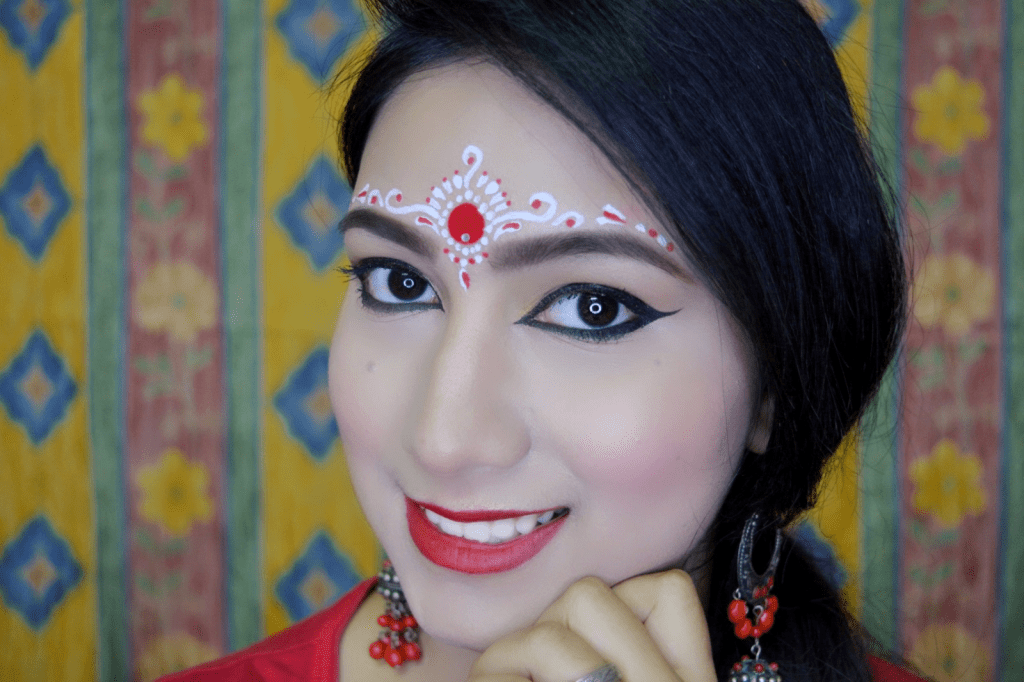
Your imagination will be blown by the attention to detail in these bridal bindi designs! One is urged to stop and take a moment to admire how meticulously they are drawn around a large, red bindi. In Bengali culture, the Chandan bindi, often referred to as Chondon, is crucial. The eye-catching patterns can cover the entire woman’s forehead and are primarily drawn in white and deep crimson. This one looks absolutely lovely when worn with a juda hairdo!
Prepare to have some of the most gorgeous forms painted on your forehead if you’re a Bengali bride getting married soon. These shapes may resemble those you’ve seen on other brides in your family. Even try out a brand-new bridal kolka design.
2) Chandra Bindi Designs
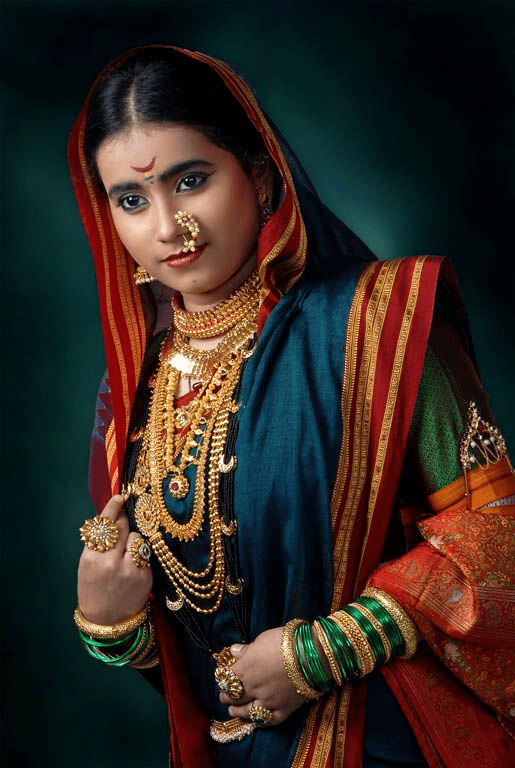
The crescent-shaped bindi that many women wear on their foreheads on holidays like Ganesh Chaturthi and Gudi Padwa, as well as during weddings and wedding celebrations, typically when wearing a Nauvari saree, is well known to many of us. Well, this bindi, which is also referred to as the Chandra Bindi, is a product of Maharashtrian culture.
It can be adorned with adherent crystals or stones, or it can be a solid, bright colour like red, orange, or green, among many others. Due to their unique shape, these bindi designs immediately stand out and are favoured by many Indian ladies, whether they are Maharashtrian or not.
Bindi in Bold Red
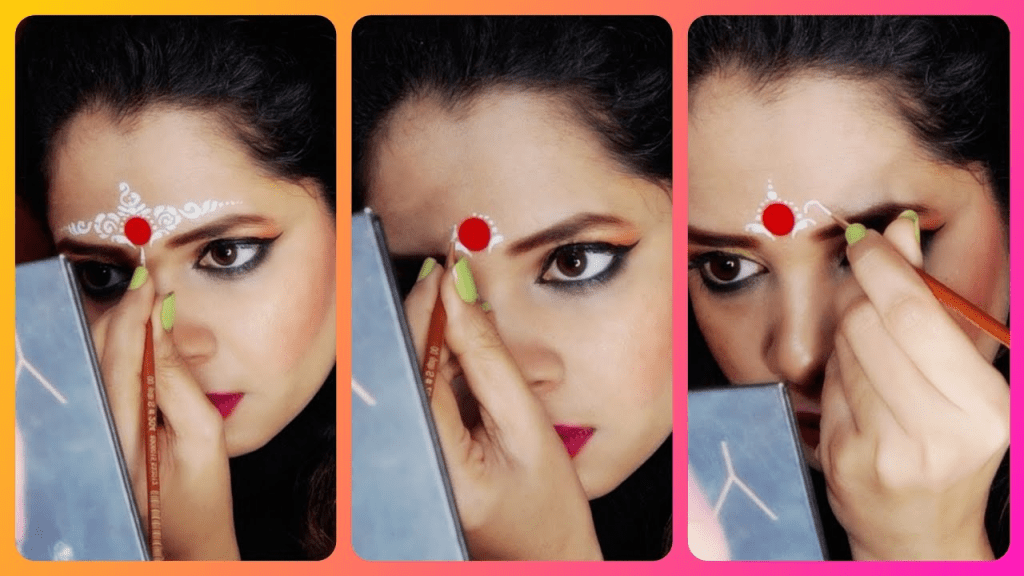
Red bindis, as opposed to new-age designs, are the most traditional, as many people already know. Bold crimson bindis are much more than just fashion accessories. It represents femininity and is ageless and lucky.
Both enormous and little are equally potent, yet the latter is frequently regarded as more understated than the former. Like the sindoor, the red bindi is also said to bring wealth to a woman after her marriage, thus she should always wear it.
4) Bindi Teardrop
These kind of bindi designs look great on people with round face shapes, whether they’re wearing them to a wedding, a celebratory celebration, or any other important occasion. The more chubby or rounder facial shapes are ideal for teardrop-shaped bindis since they lend a certain definition to the overall image.
They come in solid colours or embroidered styles, although we normally prefer the former. For added emphasis, teardrop bindis can be be worn with other tiny stick-ons.
5) Abstract Bindi
These ones are perfect if you don’t want to commit to a specific form or size! This elaborate bindi design uses abstract and frequently free-flowing patterns. Normally, they are just constructed in one colour, but the more artistic ones might have more than two!
If you have an eye for it, you can detect them in a variety of patterns that resemble paisleys, particular veggies, etc. These bindis can be worn to add additional definition to foreheads that are longer and wider.
 Fashion Trendz